


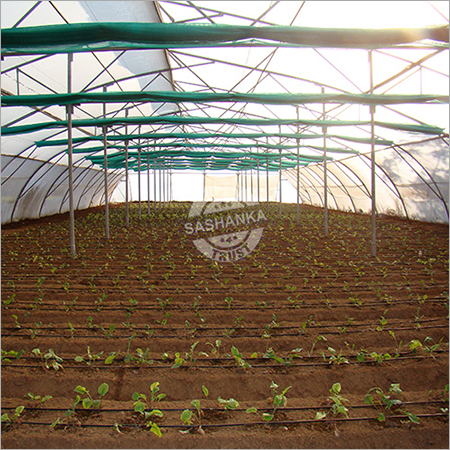
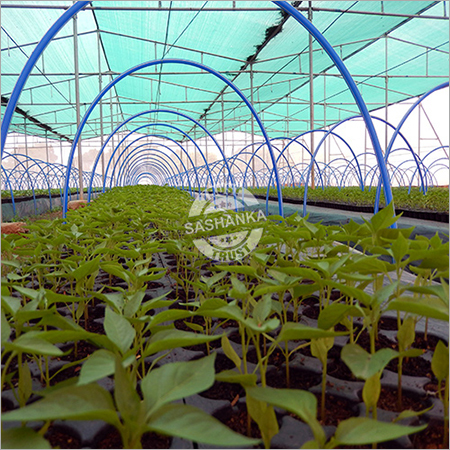
High Tunnel Polyhouse
Product Details:
- Features Wind Resistant, UV Protected, Easy Assembly, Eco-friendly
- Surface Treatment Corrosion Resistant Galvanized Coating
- Usage & Applications Vegetable Cultivation, Flower Farming, Nursery, Protection from Extreme Weather
- Product Type High Tunnel Polyhouse
- Greenhouse Size Customizable (commonly 8-12m width x 20-100m length x 3.5-4.5m height)
- Cover Material UV Stabilized Polyethylene Film
- Film Thickness 120 to 200 microns
- Click to View more
X
High Tunnel Polyhouse Price And Quantity
High Tunnel Polyhouse Product Specifications
- Manual or Optional Automatic Sensors for Temperature & Humidity
- 120 to 200 microns
- Customizable (commonly 8-12m width x 20-100m length x 3.5-4.5m height)
- Wind Resistant, UV Protected, Easy Assembly, Eco-friendly
- UV Stabilized Polyethylene Film
- Corrosion Resistant Galvanized Coating
- Cost Effective Installation, Extended Growing Season, Increased Yield
- Vegetable Cultivation, Flower Farming, Nursery, Protection from Extreme Weather
- Natural Ventilation, Side Roll-up Curtains
- High Tunnel Polyhouse
- Typically 7 to 12 meters
- Natural Daylight; Artificial Grow Lights Optional
High Tunnel Polyhouse Trade Information
- Yes
Product Description
Our specially designed High Tunnel Polyhouse is suitable for cultivation of Cut flowers like Gerbera, Carnation, Dutch Roses, Anthurium, Exotic Vegetables like Cherry Tomato, Cucumber, Broccoli, Colored Capsicum & Medicinal plants. Our High Tunnel Polyhouse is equipped with ventilation & screening systems, plant trellising, latest micro irrigation & fertigation systems. Our G.I fabricated High Tunnel Polyhouse is covered with polyethylene film. Our High Tunnel Polyhouses are available in sizes range from 300 Sqmtr to 2000Sqmtr/customized.
Customized Climate Control for Optimized Cultivation
This high tunnel polyhouse is engineered to maintain a crop-friendly environment, keeping temperatures between 10C and 35C. Whether youre growing vegetables, flowers, or saplings, features such as manual or automatic climate sensors and side roll-up curtains allow precise control over temperature and humidity, ensuring healthier plants and higher yields.
Durable, Weather-Resistant Construction
The robust, arch-shaped structure stands firm against winds of up to 120 km/h and standard snow load conditions. The frames corrosion-resistant galvanized coating coupled with UV-stabilized polyethylene film delivers long-term protection against harsh weather, while optional fire retardancy adds an extra layer of safety. The result is a polyhouse thats built for endurance and peace of mind.
FAQs of High Tunnel Polyhouse:
Q: How do I choose the right size and ventilation system for my high tunnel polyhouse?
A: Selecting the appropriate size depends on your crop type and available space. Common widths range from 8 to 12 meters and lengths from 20 to 100 meters. For effective ventilation, manual side and ridge vents along with optional side roll-up curtains help regulate temperature and humidity, essential for healthy plant growth.Q: What types of crops are best suited for polyhouses with this structure?
A: These polyhouses are ideal for a variety of uses, including vegetable cultivation, flowering plants, and nursery saplings. Their design provides reliable protection from extreme weather, making them suitable for extending growing seasons and improving crop yield in a range of agricultural settings.Q: Where can the high tunnel polyhouse be installed and what are the anchoring options?
A: Installation is flexiblepolyhouses can be set up on open fields or dedicated agricultural plots. Anchoring is achieved using foundation posts or plates for stability, ensuring the structure remains secure under high wind conditions and on a variety of soil types.Q: When is the best time to install a high tunnel polyhouse for maximum crop benefit?
A: Installation is recommended before the onset of your main cropping season, allowing time to set up and test systems. This timing ensures plants get the benefits of extended sunlight and controlled climate right from the start, maximizing growing potential.Q: What is the process for installing and maintaining the polyhouse?
A: Professional installation services are available upon request. The structure is designed for easy assembly, typically involving foundation placement, frame setup, film covering, and installation of vents. Regular maintenance includes checking film condition, cleaning vents, and monitoring the anchor stability to ensure lasting performance.Q: What are the benefits of using UV stabilized polyethylene film as the covering material?
A: UV stabilized polyethylene film protects crops from harmful solar rays while allowing beneficial sunlight to penetrate. Its transparencyor optional diffusionenhances light distribution and plant growth. With a typical lifespan of 3-5 years, it is a cost-effective choice offering both durability and productivity.Q: How can I improve environmental monitoring within my high tunnel polyhouse?
A: The polyhouse supports either manual monitoring or the integration of automatic sensors for temperature and humidity. Upgrading to automated systems enables real-time adjustments, ensuring a stable growing environment and reducing the need for constant manual intervention.Tell us about your requirement

Price:
Quantity
Select Unit
- 50
- 100
- 200
- 250
- 500
- 1000+
Additional detail
Mobile number
Email

Other Products in 'Greenhouses' category

Contact Details
SASHANKA AGRO TECH PVT. LTD.
GST : 20AAFCS8935A1ZP
GST : 20AAFCS8935A1ZP

- Morabadi, Ranchi - 834008, Jharkhand, India
- Phone :08045801926
 Send Inquiry
 Send SMS
- Assistant Manager - Sales & Marketing
Mobile :+918037301542 - Send Inquiry
 Send Inquiry
Quick Inquiry

|

 |
SASHANKA AGRO TECH PVT. LTD.
All Rights Reserved.(Terms of Use) Developed and Managed by Infocom Network Private Limited. |
